
Chain necklace fashion works because it gives an outfit structure fast, even when everything else feels basic, but it also gets tricky when the chain competes with necklines, earrings, or bold prints.
If you have a few chains sitting in a jewelry box and you keep reaching for the same one, you’re not alone, most people aren’t short on necklaces, they’re short on clear rules for pairing them with real outfits: office days, errands, dinners, and those “I need to look put-together in 10 minutes” mornings.
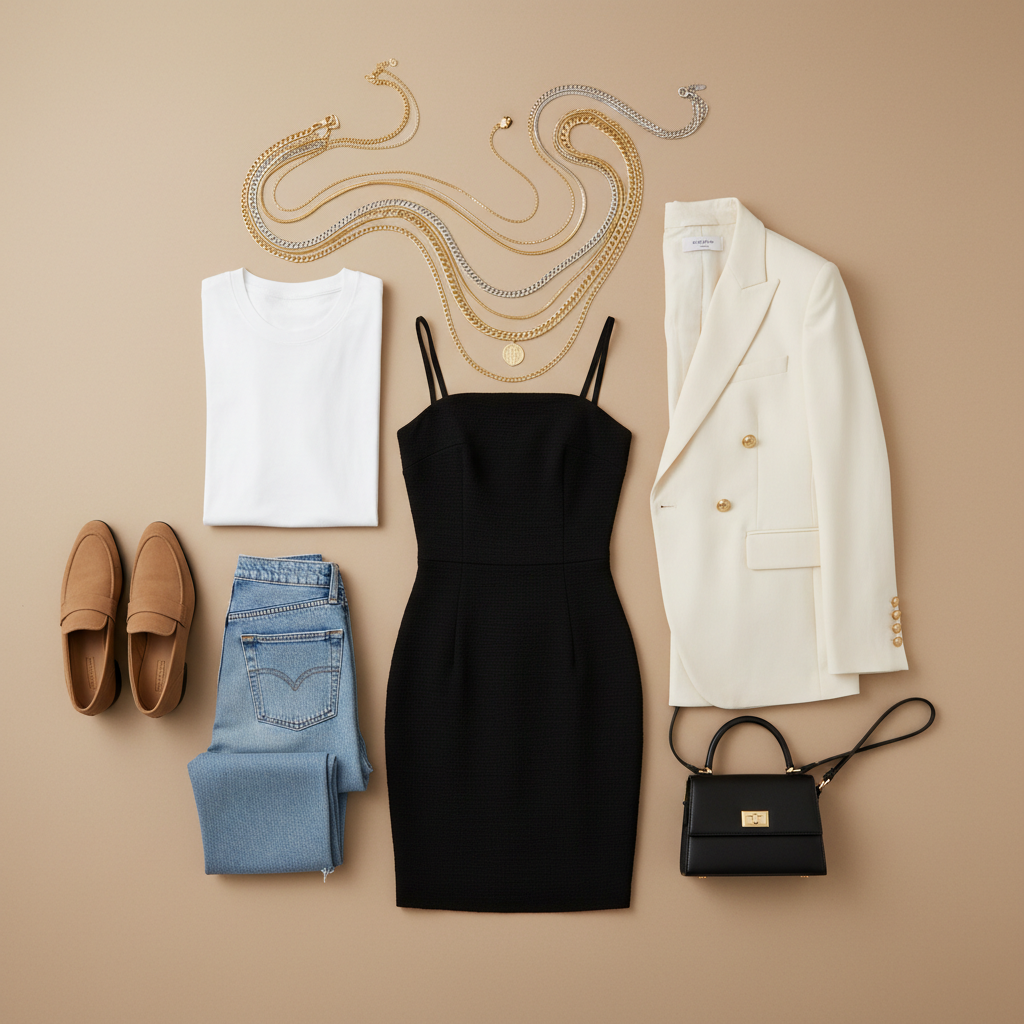
This guide keeps it practical, you’ll get outfit formulas, a quick table for matching chains to necklines, and a simple checklist to avoid the most common styling mistakes. You’ll also see where it’s worth spending more effort, and where it’s not.
Why chain necklaces feel “right” in so many outfits
Chains sit in a sweet spot between minimalist and statement, which is why they show up in everything from street style to office wardrobes. A few reasons they’re so flexible in day-to-day dressing:
- They add visual lines near the face, which can make a plain top look intentional.
- They scale easily, thin chains read subtle, thicker links read bold without needing extra accessories.
- They layer well with pendants, lockets, pearls, or even a second chain, so you can change the vibe without changing the whole outfit.
- They translate across aesthetics, same chain can feel polished with a blazer or edgy with leather.
According to The Gemological Institute of America (GIA)... the practical takeaway is that durability and wear patterns vary by metal and construction, which matters if you plan to wear a chain daily. In real life, “style” and “can survive your routine” need to meet in the middle.
Quick self-check: which chain necklace situation are you in?
Before you copy outfit ideas, it helps to name the actual problem. Pick the one that sounds like you:
- I wear chains, but they disappear against my tops, hair, or skin tone.
- My chain fights my neckline, it sits awkwardly or gets hidden.
- Layering looks messy on me, tangling, uneven spacing, or too much shine.
- I own a chunky chain and it feels costume-y outside of going out.
- I mix metals and it never looks deliberate, just random.
Once you identify the pattern, the fix is usually one change: length, thickness, or what else you’re pairing it with.
Neckline-to-chain matching table (save this)
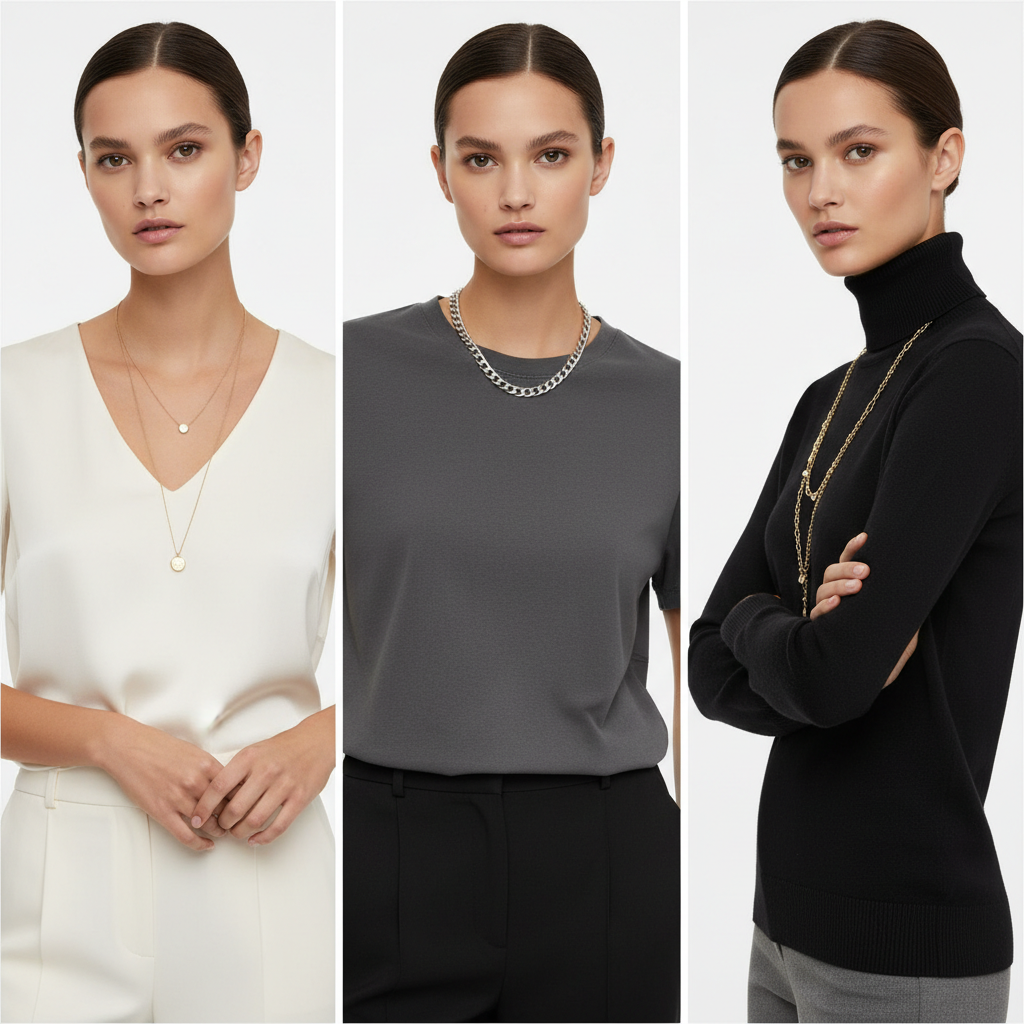
If your chain feels “off,” the neckline mismatch is often the reason. Use this as a starting point, then tweak for your comfort and proportions.
| Neckline | Chain length that usually works | Chain style notes |
|---|---|---|
| Crew neck / high neck tee | 18–22 in | Go a touch longer so the chain clears the collar line; medium links show up well. |
| V-neck | 16–18 in | Follow the V shape with a slimmer chain or a small pendant if you like definition. |
| Button-down / collared shirt | 16–20 in | Try a short chain inside the open collar, or a longer chain over the shirt for contrast. |
| Scoop / square neck | 16–18 in | Shorter chains keep the look clean; a slightly chunkier link can balance a wide neckline. |
| Strapless / off-shoulder | 14–17 in | Choker-to-collarbone lengths highlight the open skin area; avoid extra-long chains. |
| Turtleneck | 20–28 in | Longer chains sit on top without crowding; pendants and bold links work well. |
Outfit formulas: chain necklace fashion ideas you can repeat
These are meant to be “plug-and-play.” If you have the basics, you can build the look in minutes.
1) White tee + denim + medium chain
This is the low-effort classic, but the chain makes it feel finished. Choose a medium link that still reads from a normal distance.
- Best chain: curb, paperclip, or figaro in 18–22 in
- Styling move: add small hoops or studs, then stop there
2) Blazer + tank + short chain (office-friendly)
For work settings, you want shine that looks intentional, not noisy. A shorter chain keeps attention near the face and avoids snagging on lapels.
- Best chain: slim herringbone or tight-link cable, 16–18 in
- Tip: if your blazer has strong shoulders, go slimmer on the chain so the outfit stays balanced
3) Button-down shirt + chain inside the collar
Unbutton one or two, then place the chain so it sits within the open V. This is where chain necklace fashion looks polished without trying.
- Best chain: delicate-to-medium, 16–18 in
- Tip: if you wear glasses, keep the chain lighter so the face doesn’t feel crowded
4) Slip dress or satin cami + bold chain (night-out, but not costume)
The trick is contrast, one sleek fabric plus one strong link. Keep the rest of jewelry simple so the chain does the job.
- Best chain: chunky curb or oversized paperclip, 16–20 in
- Skip: statement earrings at the same time unless they’re very clean
5) Sweater or turtleneck + longer chain
Longer chains create vertical lines over knitwear, which helps the outfit feel less heavy. If you’re layering, this is the easiest place to do it.
- Best chain: 20–28 in, medium thickness so it doesn’t vanish on fabric
- Layer option: one shorter thin chain under, one longer chain over
How to layer chains without tangling or looking “busy”
Layering is where most people get frustrated, not because they lack taste, but because small technical details matter.
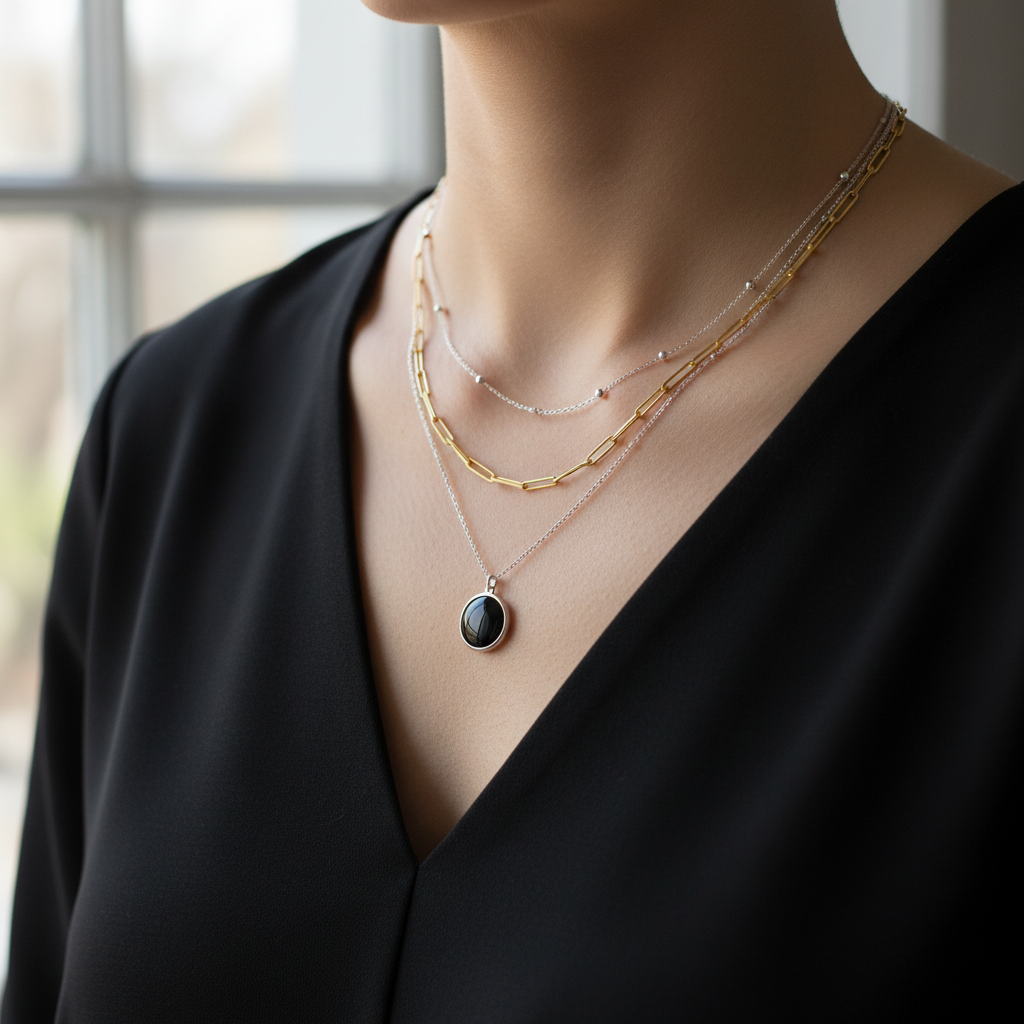
- Use different lengths, aim for at least a 2-inch gap between chains so they don’t stack in the same spot.
- Mix textures, not everything, pair one smooth chain with one link chain, instead of two similar chains fighting.
- Pick one hero, if one chain is bold, the other should be quieter.
- Match the neckline first, then layer within that “frame.”
If tangling is constant, a layering clasp or having one necklace as a single piece can help. And if you have sensitive skin, irritation can happen with certain alloys, so it may be worth checking materials or asking a professional jeweler for guidance.
Practical styling tips that make chains look expensive
You don’t need a massive jewelry wardrobe. You need consistency and a bit of editing.
- Choose one metal direction per outfit, all-gold, all-silver, or a clear intentional mix with one dominant tone.
- Repeat a shape, if the chain has sharp links, choose earrings with cleaner geometry.
- Mind the shine level, very glossy chains can read dressy; brushed or flatter links feel quieter for daytime.
- Watch your neckline hardware, zippers, rivets, and bold buttons can compete with a statement chain.
Key takeaway: when in doubt, reduce one element, either the chain thickness, the earring size, or the print intensity. One strong focal point beats three average ones.
Common mistakes (and the quick fixes)
These are the “why does this look weird on me” issues that come up over and over.
- Mistake: chain lands exactly on the collar edge. Fix: go 1–2 inches shorter or longer so it clears the edge.
- Mistake: chunky chain + chunky earrings + bold neckline. Fix: pick one statement, keep the rest minimal.
- Mistake: chain disappears on your top. Fix: increase thickness slightly or switch metal tone for contrast.
- Mistake: layers sit in one clump. Fix: use more spacing in lengths and different link styles.
- Mistake: mixed metals feel accidental. Fix: add one bridging piece (two-tone watch, ring, or chain) to make it look planned.
When it’s worth asking a jeweler (or getting help)
If your chain necklace fashion goals include daily wear, gym-to-office transitions, or you sleep in your jewelry, it’s smart to sanity-check durability. According to Federal Trade Commission (FTC)... jewelry metal claims and markings matter for consumer clarity, so if you’re unsure what you’re buying, asking questions is reasonable.
- You get frequent clasp failures, broken links, or skin irritation.
- You want to shorten a chain, add an extender, or create a permanent layered set.
- You’re buying a higher-cost piece and want confirmation on materials and care.
Professional advice becomes especially helpful when allergies are involved or when you’re modifying a chain, because a small change can affect how it sits and how it wears over time.
Conclusion: make chain styling feel automatic
Chain necklaces look best when they follow a simple logic: match the neckline, choose the right thickness for the outfit’s vibe, then edit everything else so the chain has room to work. If you want an easy next step, pick two go-to combos, like a medium chain for tees and a shorter chain for blazers, and wear them for a week to see what feels most like you.
If you’re building your wardrobe around repeatable formulas, save the neckline table, then test one small change at a time, length before you buy a whole new set of jewelry.
FAQ
What chain necklace length looks best for everyday outfits?
Many people find 18–20 inches easiest for daily wear because it clears most necklines without feeling too long. If your tops skew higher-neck, going slightly longer often looks more intentional.
How do I style a chunky chain necklace without looking overdressed?
Pair it with quiet basics, a solid tee, a simple tank, a minimal dress, and keep earrings small. Let the chain be the loudest item, and the outfit usually reads modern instead of costume.
Can I mix gold and silver chain necklaces in the same look?
Yes, but it helps to make the mix obvious and planned, like one dominant metal plus a smaller accent chain, or a two-tone accessory to “connect” the palette. If everything is half-and-half, it can feel indecisive.
What’s the easiest way to layer chain necklaces neatly?
Use distinct lengths with at least a 2-inch difference and avoid two chains with identical link size. A layering clasp can also reduce tangling if you wear layers often.
Which chain styles are most versatile for chain necklace fashion?
Curb and paperclip chains tend to work across casual and dressy outfits. A slim herringbone looks sleek but can be less forgiving if it twists, so it depends on how you move and how often you wear it.
How do I choose a chain for a turtleneck or sweater?
Go longer so the chain sits on top of the fabric and creates a vertical line, often 20–28 inches. Medium links usually show up better on knits than very delicate chains.
My chain irritates my skin, what should I do?
Stop wearing it until you figure out the cause, irritation can come from certain alloys, plating wear, or even skincare products interacting with metal. If it keeps happening, consider asking a jeweler or a healthcare professional for advice.
If you’re trying to simplify your styling routine, a small curated set of chains in two lengths and one clear metal palette can do more than a drawer full of random pieces, and if you need a more hands-off approach, bringing a few daily outfits to a jeweler or stylist for quick pairing suggestions can save a lot of trial-and-error.