
how to fold pants to save space starts with one simple idea, make every fold predictable so your stacks stay flat, stable, and easy to grab without pulling everything apart.
If your drawers look “fine” until you try to add one more pair, you already know the problem, pants are bulky, denim fights back, and most folds trap air. The good news is you don’t need fancy gear to fix it, just a few reliable folds and a clear rule for when to hang instead of fold.
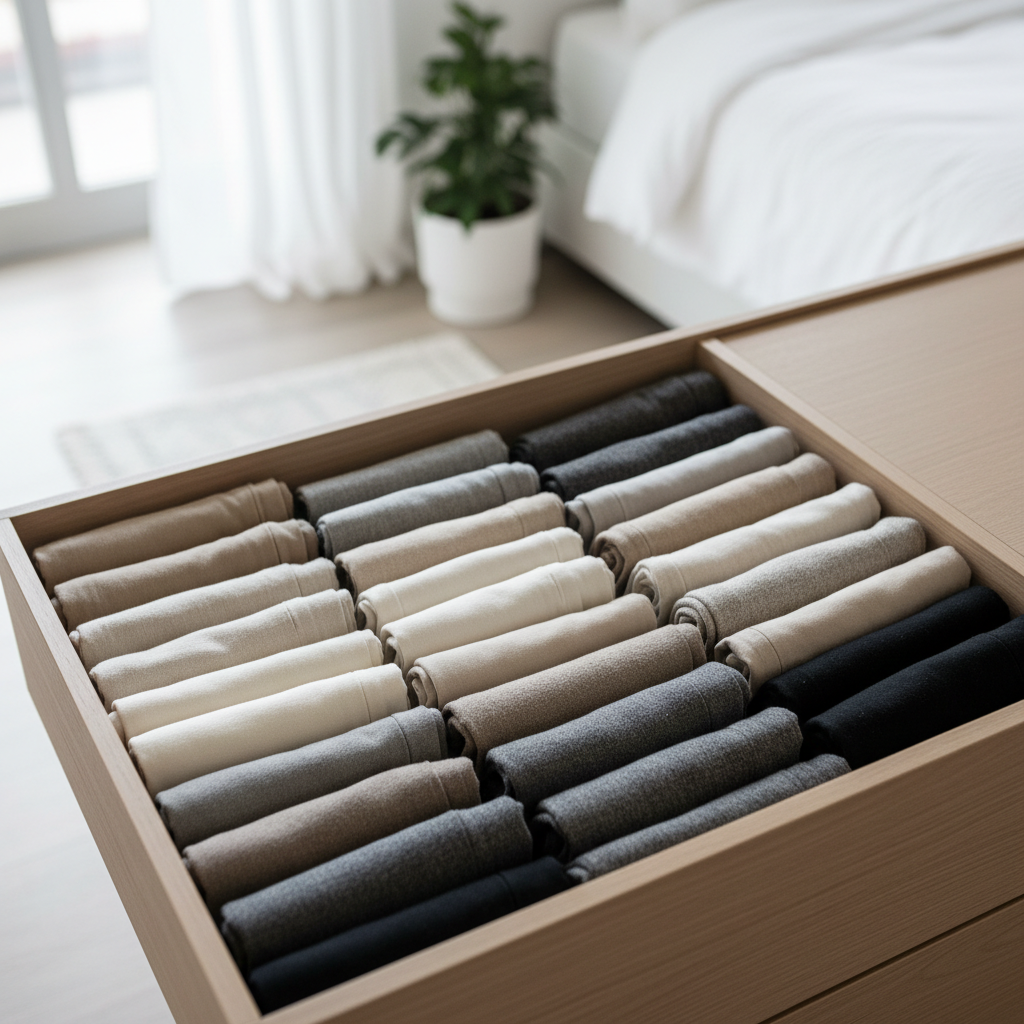
This guide walks through practical folding methods for different fabrics, how to set up drawers so folds actually stay put, and a quick decision checklist so you stop wasting time refolding the same pile every week.
Why pants take up so much space (and what to fix first)
Most “space issues” come from a few repeat offenders, not from owning too many pants. Once you spot which one applies to you, the fix gets straightforward.
- Air pockets in the fold, loose folds create “pillow stacks” that collapse and spread.
- Mixed thickness in one pile, leggings stacked with jeans makes the pile tilt and slide.
- Folds that don’t match drawer depth, extra fabric bunches at the back, wasting usable space.
- Wrong storage choice, some trousers wrinkle easily and are better hung, not folded.
One underrated trick, fold to the container rather than folding “normally.” Your drawer size and shelf height should dictate the final rectangle.
Quick self-check: which storage setup are you working with?
Before you pick a method, answer these in 30 seconds. It saves you from choosing a fold that looks great on a table and fails in real life.
- Drawer depth: shallow (4–6 in), medium (6–10 in), deep (10+ in).
- Main fabric: denim, chinos, dress slacks, sweatpants, leggings.
- How you grab items: from the top of a stack, or “file” style (front-to-back).
- Wrinkle tolerance: OK with casual creases, or need crisp legs for work.
If you need crisp trousers for office wear, consider hanging more and folding fewer. According to the American Cleaning Institute, checking care labels and following garment care guidance helps reduce damage and avoid unnecessary wear from improper storage and laundering routines.
3 space-saving folding methods (pick one and stick with it)
how to fold pants to save space is less about a “secret technique” and more about choosing a fold that matches how you store and retrieve clothes. These three cover most homes.
Method A: The “File Fold” for drawers (best for most people)
This is the fold that lets you see everything at once, like folders in a cabinet. It’s especially good for leggings, joggers, and lighter pants.
- Lay pants flat, smooth the pockets and waistband.
- Fold in half lengthwise, align seams.
- Fold from the cuffs up in 2–3 sections until you get a firm rectangle.
- Stand the rectangle upright in the drawer, packed snug so pieces support each other.
Small but important, the last fold should be tight enough that the rectangle holds its shape when you lift it with one hand.
Method B: The “Retail Stack” for shelves (stable, fast, clean look)
If you stack on open shelves, stability matters more than visibility. This fold creates flat layers that don’t flare out.
- Lay pants face down, smooth wrinkles.
- Fold in half lengthwise.
- Fold cuffs to waistband, then fold once more to match shelf height.
- Stack with heaviest on bottom, lightest on top.
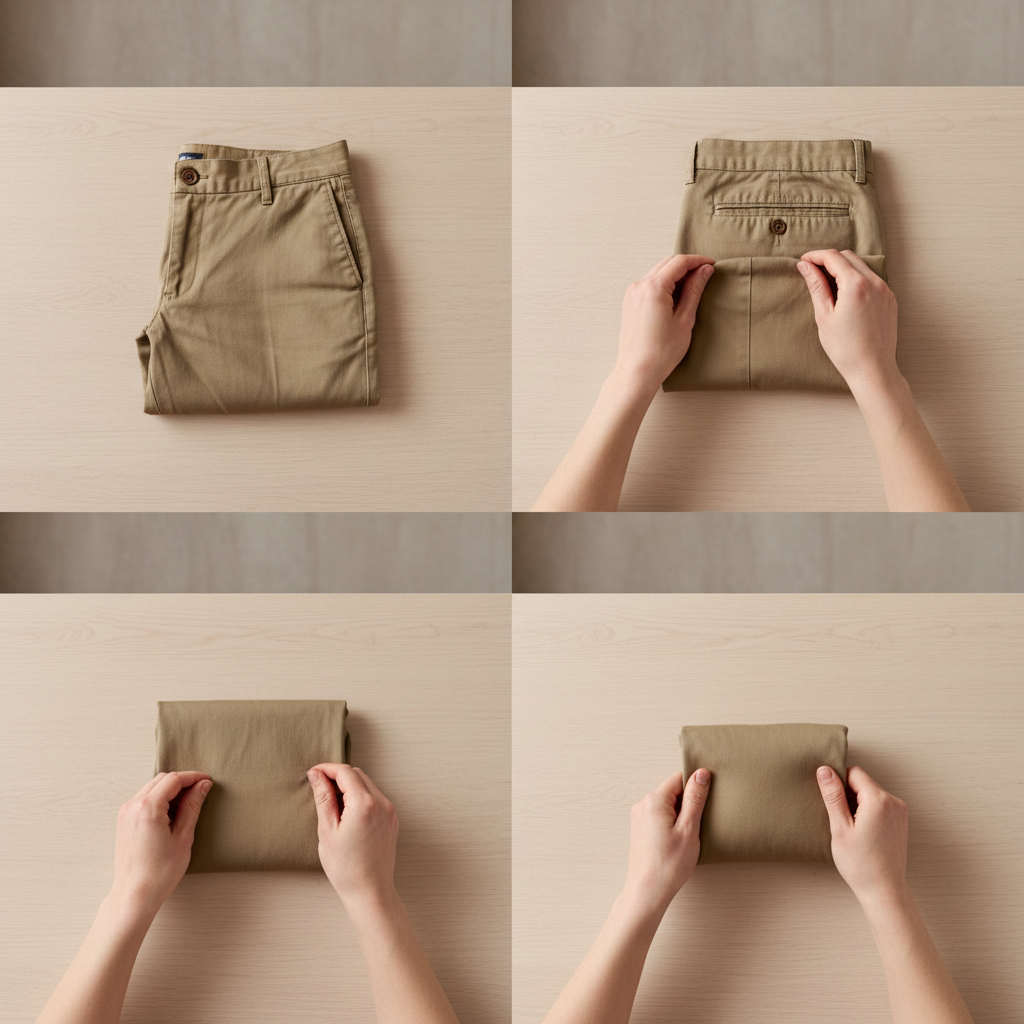
Denim works well here, but don’t over-stack, tall piles tip and “spread” even when folded well.
Method C: The “Travel Roll” for luggage (space + fewer hard creases)
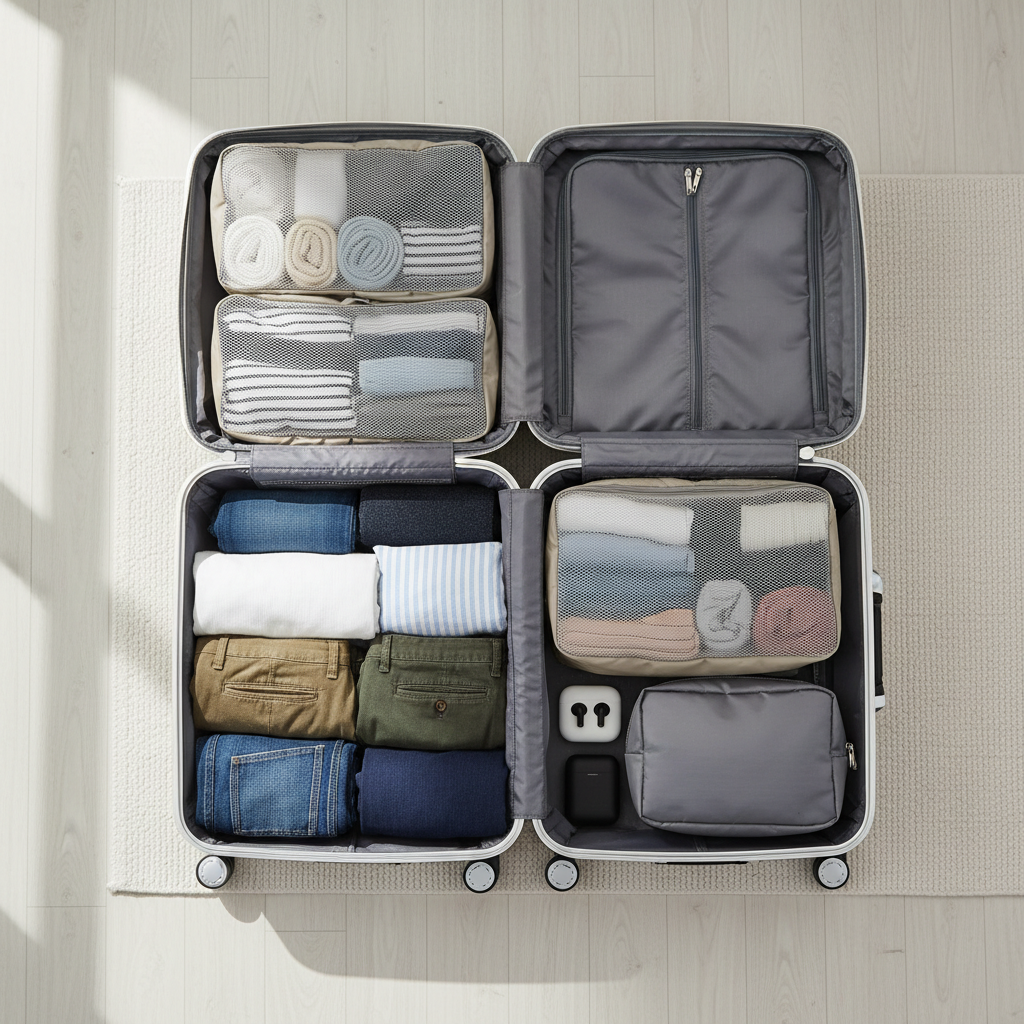
Rolling is great for casual pants when you’re trying to maximize suitcase space. It can also reduce sharp fold lines, though it won’t magically prevent wrinkles in wrinkle-prone fabrics.
- Lay pants flat and smooth.
- Fold in half lengthwise.
- Start at the cuffs and roll tightly toward the waistband.
- Tuck the waistband edge around the roll if possible for a tighter bundle.
For dress slacks, rolling sometimes creates long ripples. If you travel often with work pants, consider a garment folder or hangable suit bag.
Best fold by fabric: a practical comparison table
Not all pants behave the same. Use this as a quick match, then adjust the final size to your drawer or shelf.
| Fabric / Type | Recommended method | Why it works | Watch out for |
|---|---|---|---|
| Jeans / heavy denim | Retail Stack | Flat, stable layers | Piles get heavy, keep stack shorter |
| Chinos | File Fold or Retail Stack | Easy to compress, easy to grab | Bulky pockets can “bump” stacks |
| Dress slacks | File Fold (gentle) or Hang | Less crushing than deep stacks | Wrinkles if over-compressed |
| Sweatpants | File Fold | Stops drawer overflow fast | Thick waistbands trap air, smooth them |
| Leggings | File Fold | Compact, easy visibility | Very soft fabric can slump, pack snug |
Make the fold “stay”: drawer and shelf setup that matters
A lot of people learn how to fold pants to save space, then get frustrated because everything unravels after two mornings. Usually it’s not the fold, it’s the storage friction.
- Use dividers or small bins to stop stacks from drifting. Even shoebox-sized bins work.
- Group by thickness, denim with denim, knits with knits, so piles don’t tilt.
- Leave a finger-width of room in file-style drawers, too tight and you’ll snag items, too loose and they fall over.
- Match rectangle height to drawer height, if the fold is too tall, it buckles and expands.
If you share drawers with a partner or kids, file-folding with dividers tends to survive the “grab-and-go” lifestyle better than neat stacks.
Common mistakes (that quietly waste space)
These are small, boring details, but they’re usually why a drawer still looks full after you “organized” it.
- Folding without smoothing, wrinkles turn into bulk, bulk turns into less capacity.
- Keeping pocket lumps, bulky pockets create uneven stacks, flatten pockets before the first fold.
- Mixing long and short pants in one file row, different heights topple each other.
- Over-folding dress pants, too many tight folds can set creases you didn’t want.
- “One method for everything”, it sounds efficient, but fabric behavior matters.
Also, if you’re constantly refolding, it may be a volume issue, not a technique issue. In that case, fewer “maybe” items in the drawer helps more than any new fold.
When to hang pants instead of folding
Folding saves space, but it’s not always the right trade-off. Hanging can save time, protect the fabric, and keep a more polished look.
- High-wrinkle fabrics or tailored trousers you wear to work
- Pants you use weekly, hanging reduces rummaging and re-folding
- Pairs with sharp creases you want to maintain
If your closet rod space is limited, clamp hangers or multi-tier pant hangers can help, though some fabrics can show clip marks. For delicate materials, it may be worth testing one pair before committing.
Key takeaways + a simple 5-minute reset routine
If you want the result without turning this into a weekend project, keep it simple and repeatable.
- Pick one primary method per storage area, file fold in drawers, stack on shelves, roll for travel.
- Fold to the container, not to an imaginary “standard” size.
- Sort by thickness so piles stop sliding and bulging.
- Protect dress pants by hanging when wrinkles cost you time.
Try this reset routine, pull everything out, wipe the drawer, put back only one category at a time, and stop when the drawer closes easily. That last part sounds obvious, but it’s the line between “organized” and “about to explode again.”
Conclusion
Once you know how to fold pants to save space in a way that matches your drawer depth and fabric type, the whole system feels calmer, less digging, fewer toppling stacks, and a closet that stays usable even on rushed mornings. Pick one method today, adjust the fold size to your storage, then do a quick 5-minute reset after laundry day so the mess never fully comes back.