
The best eyebrow pencil for sparse brows is usually the one that can mimic real hair in your specific brow zone, not the one with the most hype, and that comes down to tip shape, texture, and shade match.
If your brows look patchy, thin at the tail, or uneven from over-tweezing, it’s easy to end up with that obvious “drawn-on” look, especially in daylight. A good pencil should give you control, let you build gradually, and stay put without turning waxy or shiny.
This guide breaks down what actually matters when choosing a brow pencil for sparse areas, a quick self-check to narrow options, and a step-by-step routine that looks natural up close. I’ll also call out the mistakes that waste money, because they’re common.
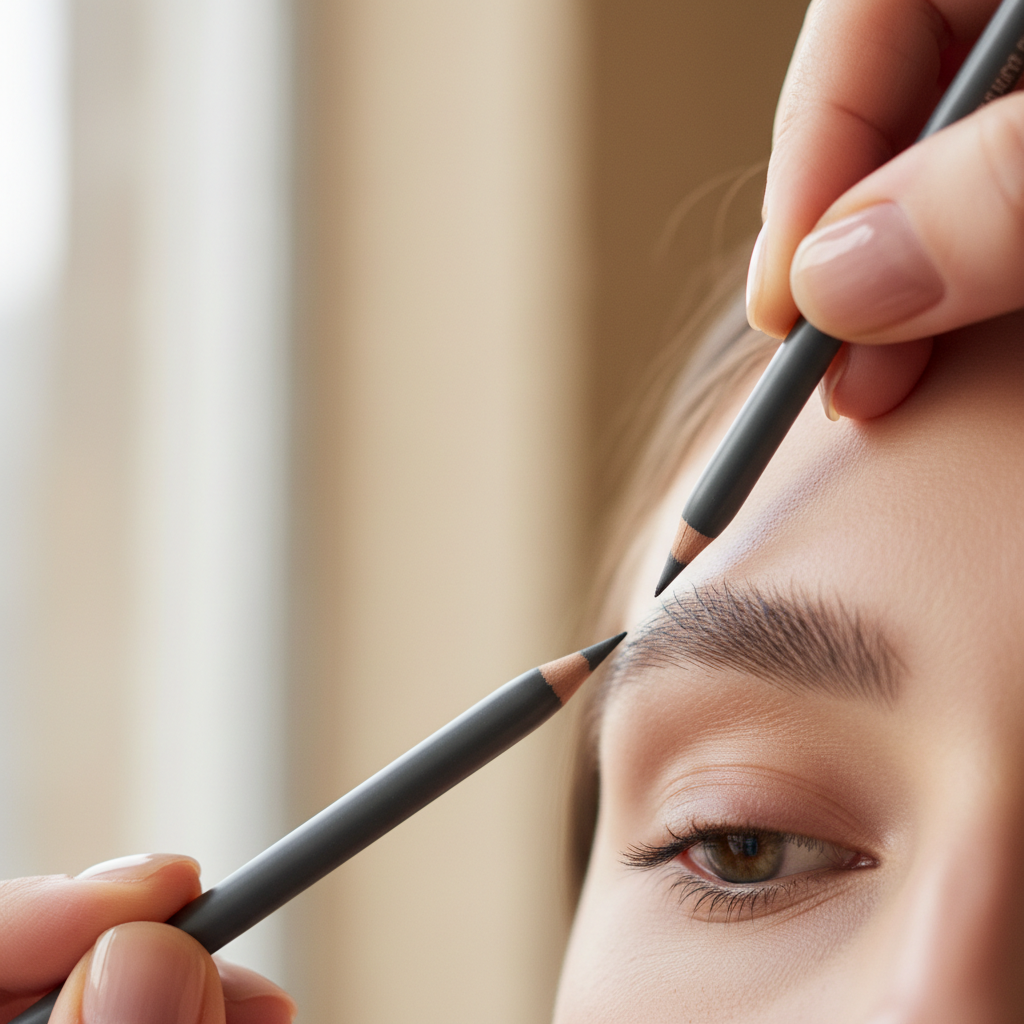
What “sparse brows” really need from a pencil
Sparse brows aren’t one thing. Some people have overall thin density, others have bald spots near the arch, and a lot of folks just lose the tail. The pencil that works depends on which of these you’re dealing with.
- Hair-like definition: A fine or micro tip helps you draw individual strokes instead of filling like a marker.
- Buildable pigment: You want light payoff that layers well, so you can stop before it looks heavy.
- Grip and glide balance: Too creamy smudges, too dry skips on skin and emphasizes texture.
- Long wear without “crunch”: Stay-put matters, but if it sets too hard it can look flat and stamped.
- A spoolie that actually blends: The brush matters more than people expect, blending is what makes sparse brows look believable.
According to the American Academy of Dermatology (AAD), eyebrow thinning can come from multiple causes, including over-plucking and skin conditions, so if your brow loss feels sudden or ongoing, it may be worth discussing with a dermatologist.
Quick self-check: choose the right pencil style for your brow pattern
Before buying anything, take 20 seconds and figure out what you’re trying to “fix.” This saves you from picking the wrong tip and blaming the product.
- Mostly sparse tail: Look for a micro-tip or angled pencil, plus a firmer formula for clean lines.
- Patchy spots in the middle: Micro-tip plus a slightly waxier formula helps grip bare skin.
- Overall thin density: A fine tip is great, but you may also want a soft powdery pencil for gentle haze, then add a few strokes.
- Oily skin or makeup melting: Drier, longer-wear formulas tend to hold shape better than ultra-creamy ones.
- Dry or textured skin: Avoid very hard pencils that skip, prioritize a smoother glide and blend with spoolie.
Key features to look for (with a comparison table)
When people search for the best eyebrow pencil for sparse brows, they often focus on brand and ignore the engineering. The tip and texture do most of the work.
| Feature | Why it helps sparse brows | What to watch out for |
|---|---|---|
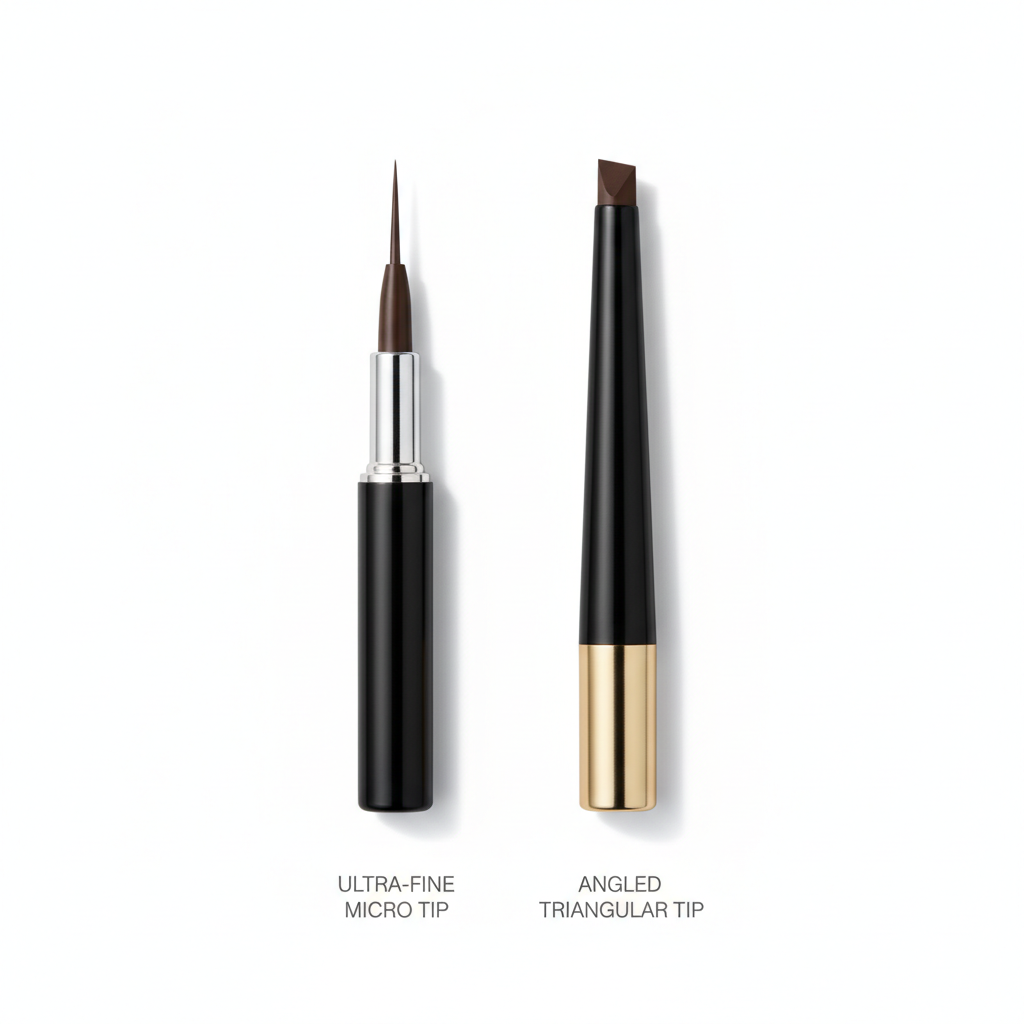
| Micro-tip (ultra-fine) | Makes realistic hair strokes, great for gaps and tails | Can break if you press too hard, slower to fill large areas |
| Angled or triangular tip | Can outline and shade quickly, useful for shaping | Easier to overfill and look blocky if pigment is strong |
| Buildable, low-to-medium pigment | Lets you layer without harsh edges | May feel “too light” if you expect instant payoff |
| Soft-matte finish | Looks more like real hair than shiny wax | Too matte can look dusty on very dry skin |
| Spoolie on the other end | Blends strokes into brow hair for a natural fade | Flimsy spoolies don’t move product well |
Shade matching for sparse brows (the part that makes or breaks “natural”)
Most “bad brow” moments come from shade choice, not technique. Sparse areas amplify contrast, so a pencil that’s a bit too dark can look harsh fast.
Practical shade rules that usually work
- If you have dark hair: many people do better with a shade slightly softer than their hair, especially if filling gaps.
- If you have blonde/light brown hair: avoid anything too warm or orange unless your hair is genuinely golden.
- If you’re gray/silver: “taupe” and cool-leaning browns often look more believable than deep brown.
- If your brows have multiple tones: pick a neutral base, then use light pressure and layer where needed.
If you’re stuck between two shades, the lighter option is usually easier to control. You can deepen strategically, but it’s annoying to undo a heavy front.
How to apply eyebrow pencil on sparse brows (step-by-step)
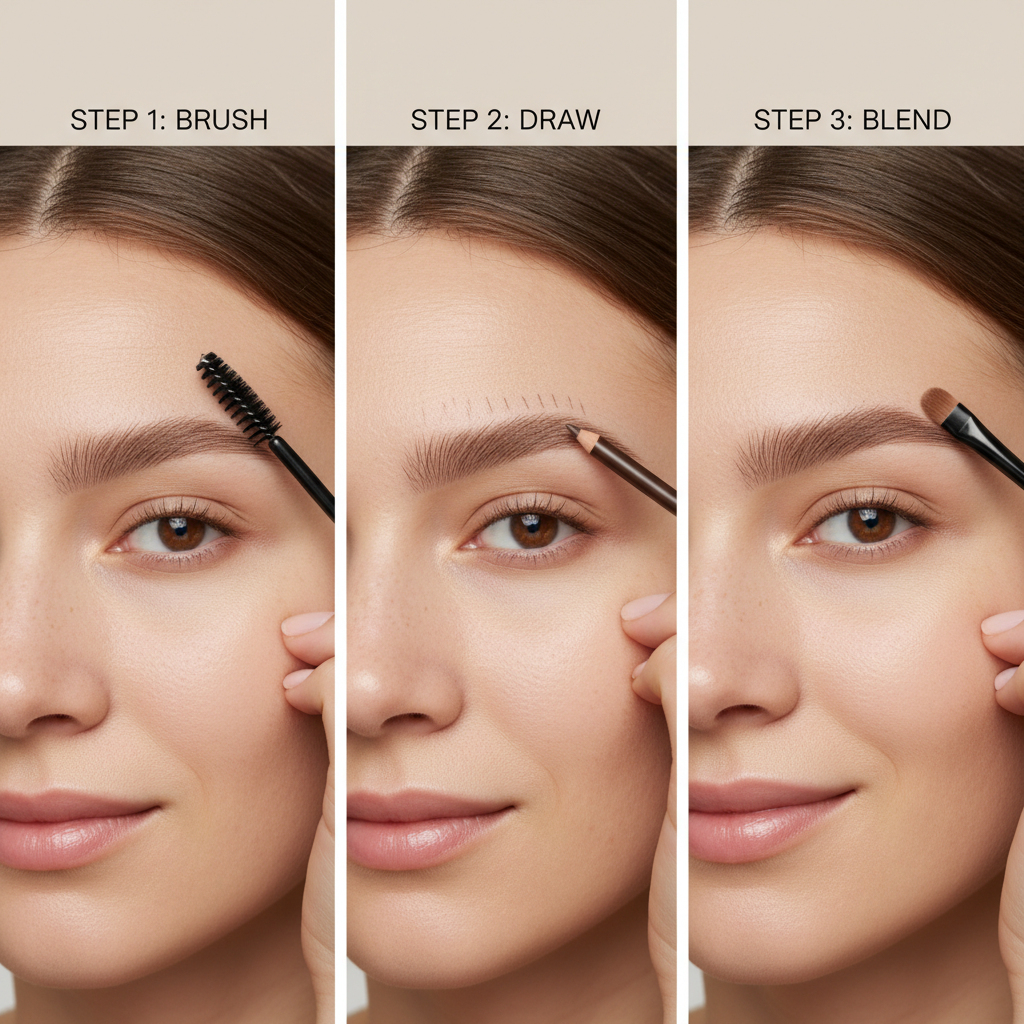
This is the routine that tends to look the most realistic in real life, not just on camera. Keep pressure light, and treat the pencil like a sketch tool, not a marker.
1) Prep the brow so product can “grip”
- If you have skincare or sunscreen near the brows, lightly blot with tissue.
- Brush hair upward and outward with the spoolie to reveal gaps.
2) Map lightly, especially the tail
- Define the underside of the tail first, using tiny strokes instead of a solid line.
- Stop the tail where it naturally ends; extending too far often reads as obvious makeup.
3) Fill gaps with micro-strokes, then blend
- Use short strokes in the direction hair grows, focusing on empty spots.
- Brush through with the spoolie to soften edges and distribute pigment.
4) Keep the front airy
- Use the least product at the inner brow, then blend back.
- If you need more definition, add two or three upward strokes, not a shaded block.
5) Set only if you need it
If your brows disappear during the day, a clear or tinted brow gel can help. If wear is already solid, adding gel can sometimes make a nice pencil look too “done,” so treat it as optional.
Common mistakes that make sparse brows look fake
These are the patterns I see most when people swear they “can’t do brows.” Usually they can, they’re just fighting the wrong habit.
- Using one heavy shade everywhere: sparse areas need dimension, not uniform fill.
- Pressing too hard: pressure creates thick, shiny lines that don’t resemble hair.
- Over-boxing the front: a squared inner brow can look severe, especially with thin density.
- Skipping the spoolie: unblended pigment sits on top of skin and reads as makeup.
- Chasing perfect symmetry: brows are sisters, not twins, overcorrecting often removes softness.
My “buying checklist” for the best eyebrow pencil for sparse brows
If you want a quick filter while shopping online or in-store, use this list. It’s not glamorous, but it works.
- Tip: micro-tip if you’re filling gaps, angled tip if you’re reshaping a lot.
- Formula: buildable, soft-matte, not overly creamy.
- Shade range: includes neutral and cool tones, not just warm browns.
- Wear: claims like “waterproof” help some people, but a natural finish matters more than extreme lock-in.
- Tools: a sturdy spoolie you’ll actually use.
Key takeaway: the “best” choice is the pencil that lets you add believable hair where you have none, then disappear into your real brow once you blend.
When to consider extra help (and what that might look like)
If your brow thinning feels sudden, patchy in a way that’s new, or comes with irritation, it may be worth talking with a dermatologist or another qualified clinician. Makeup can cover, but it won’t address underlying causes.
If you’re consistently drawing more than half the brow every day, pairing a pencil with a tinted gel or a brow powder can look softer and take less time. Some people also explore professional options like brow tinting or microblading, but results vary and it’s smart to consult a licensed provider and consider skin sensitivity before committing.
Conclusion: picking a pencil that makes sparse brows look like brows
The best eyebrow pencil for sparse brows is rarely the darkest or the most pigmented, it’s the one that stays subtle while you build realistic texture. Choose a tip that matches your gap pattern, go one shade softer than you think, and blend more than you draw.
If you do one thing after reading this, make it this: test your pencil in daylight, then adjust your pressure. That small change fixes more “why do my brows look weird?” moments than most product swaps.
FAQ
- What type of eyebrow pencil works best for very sparse brows?
Micro-tip pencils tend to work well because they can create thin strokes that resemble hair, especially in gaps and tails. If you’re reshaping the entire brow, an angled tip can be faster, but you’ll want a light hand. - Should I choose a waterproof brow pencil for sparse areas?
Water-resistant formulas can help if your makeup fades from oil or humidity, but they can also set quickly and look a bit flat if overapplied. Many people do well with long-wear rather than ultra-waterproof, then set with gel if needed. - How do I stop my brow pencil from looking too harsh?
Go lighter in shade, reduce pressure, and use the spoolie after every few strokes. Keeping the inner brow softer than the tail usually makes the biggest difference. - Is a pencil or powder better for sparse brows?
Pencils are better for creating “hair” in empty spots, powders are better for adding soft fullness behind existing hair. If you have both gaps and low density, layering powder first and pencil second can look natural. - Why does my eyebrow pencil skip or look patchy on skin?
Often it’s skincare residue or a formula that’s too dry for your skin type. Blot the brow area, try a slightly creamier pencil, and use short strokes instead of long lines. - How can I make the tail of my brows look fuller but not longer?
Build density inside your natural tail shape, focusing on the underside and center, then taper with fewer strokes at the very end. Extending the tail far past your natural endpoint is what usually makes it obvious.
If you’re trying to figure out which pencil style and shade will look most natural on your specific sparse areas, it helps to narrow it down with a quick “gap pattern” check and a daylight test, and if you’d rather skip the guesswork, bringing a clear brow photo to a beauty specialist or pro counter can make the match faster without committing to a complicated routine.