
Teacher outfit professional choices come down to one thing: looking put-together while still being able to move, bend, reach, and survive a long day that rarely goes as planned. If your wardrobe feels like a tug-of-war between “school-appropriate” and “actually comfortable,” you’re not alone.
It’s worth caring because what you wear quietly affects classroom presence, family meetings, and how confident you feel walking into observation week. The catch is that “professional” in a school setting isn’t one universal uniform, it shifts by district culture, grade level, subject area, and even the building temperature that somehow never matches the weather.
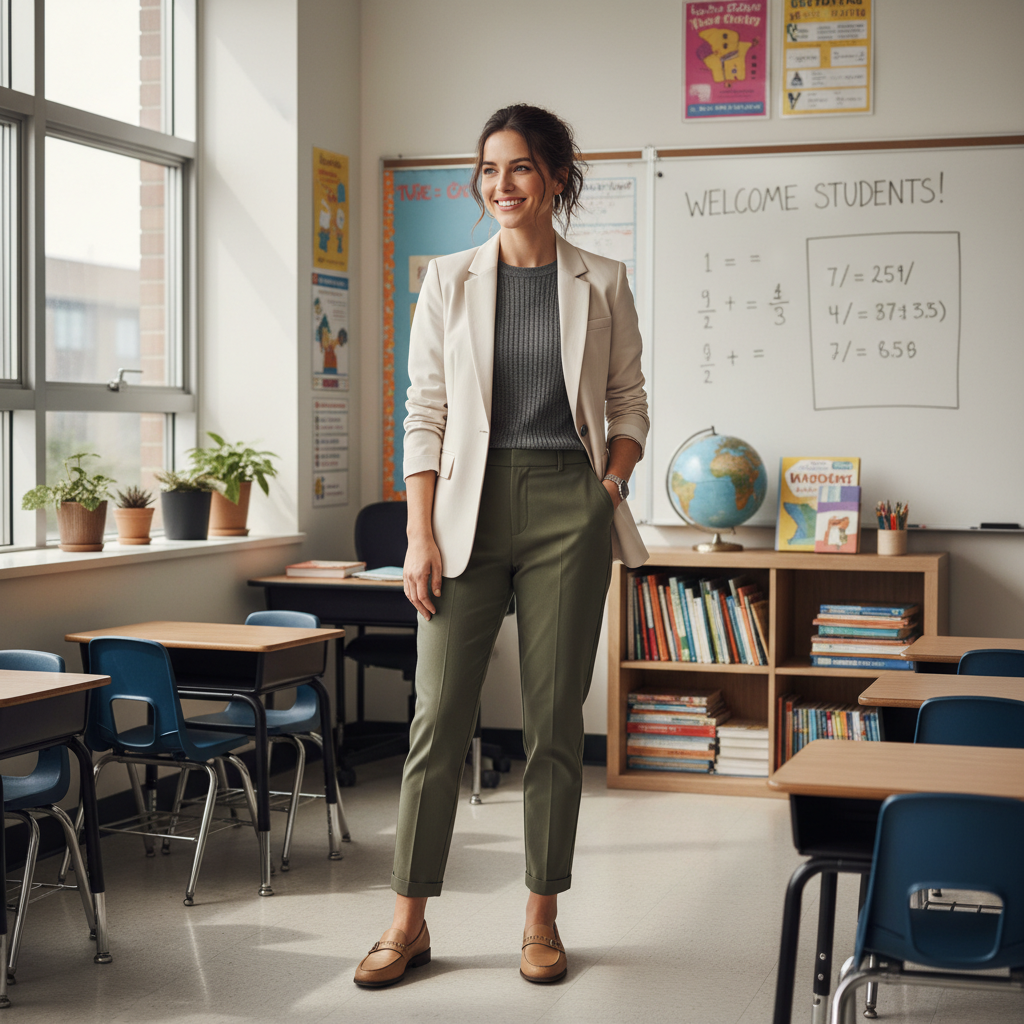
This guide gives you outfit “formulas” you can repeat, a quick self-check to match your campus vibe, plus the small details that keep a professional look from falling apart by third period.
What “professional” means for teachers (and why it varies)
In many schools, a teacher outfit professional isn’t about dressing like corporate, it’s about signaling competence and boundaries while staying practical. You want clothes that read intentional, even if you got dressed in six minutes.
According to U.S. Department of Education guidance and common district policies, dress expectations often focus on being neat, safe, and appropriate for the school environment rather than prescribing exact brands or silhouettes. Translation: your outfit should support the job, not distract from it.
- Elementary: movement-friendly, washable, usually a bit more casual, but still polished.
- Middle school: durable and structured enough to hold presence, without being stiff.
- High school: often closer to business casual, especially for presentations and parent nights.
- Specials/PE/Science: safety and function matter more, think fabrics and footwear.
If your admin culture is “jeans on Fridays only,” that’s a different world than a campus where dark denim is everyday-normal. Your goal is to land one notch above the most casual acceptable baseline.
Common reasons teacher outfits feel hard (real-world obstacles)
If you’ve ever bought “work pants” that looked great in a mirror and terrible by lunch, it usually comes down to a few predictable issues.
- Movement + coverage conflict: bending, reaching, sitting on tiny chairs, and hallway duty can expose fit problems fast.
- Temperature whiplash: freezing classrooms, warm parking lots, random outdoor drills.
- Dress code uncertainty: staff handbook language can be vague, and enforcement can be inconsistent.
- Shoe reality: you might walk miles a day, but many “dress” shoes aren’t built for it.
- Laundry fatigue: dry-clean-only pieces don’t last in a teacher rotation.
Also, a lot of “teacher style” online assumes one body type and one school vibe. If it makes you feel like you’re failing at fashion, it’s the advice that’s narrow, not you.
Quick self-check: which professional lane fits your school?
Before you shop or overhaul anything, figure out the lane you’re actually dressing for. Use this quick checklist and pick the best match.
- Lane A: Classic business casual (common in high schools): blazers, trousers, structured dresses, minimal sneakers.
- Lane B: Polished casual (many elementary/middle schools): cardigans, ankle pants, dark denim if allowed, clean sneakers.
- Lane C: Practical professional (labs, SPED, art, early childhood): washable layers, sturdy shoes, simple silhouettes.
Ask yourself:
- Do most colleagues wear denim on normal weekdays?
- Are you on your feet all day or mostly at a desk?
- Do you need clothes that can handle paint, glue, science labs, or sensory tools?
- Do you attend frequent meetings with families or community partners?
Once you pick a lane, your teacher outfit professional choices get easier because you stop shopping for an imaginary job.
Repeatable outfit formulas (mix-and-match without overthinking)
These are the combinations that tend to work across most U.S. school settings, with small swaps depending on your lane.
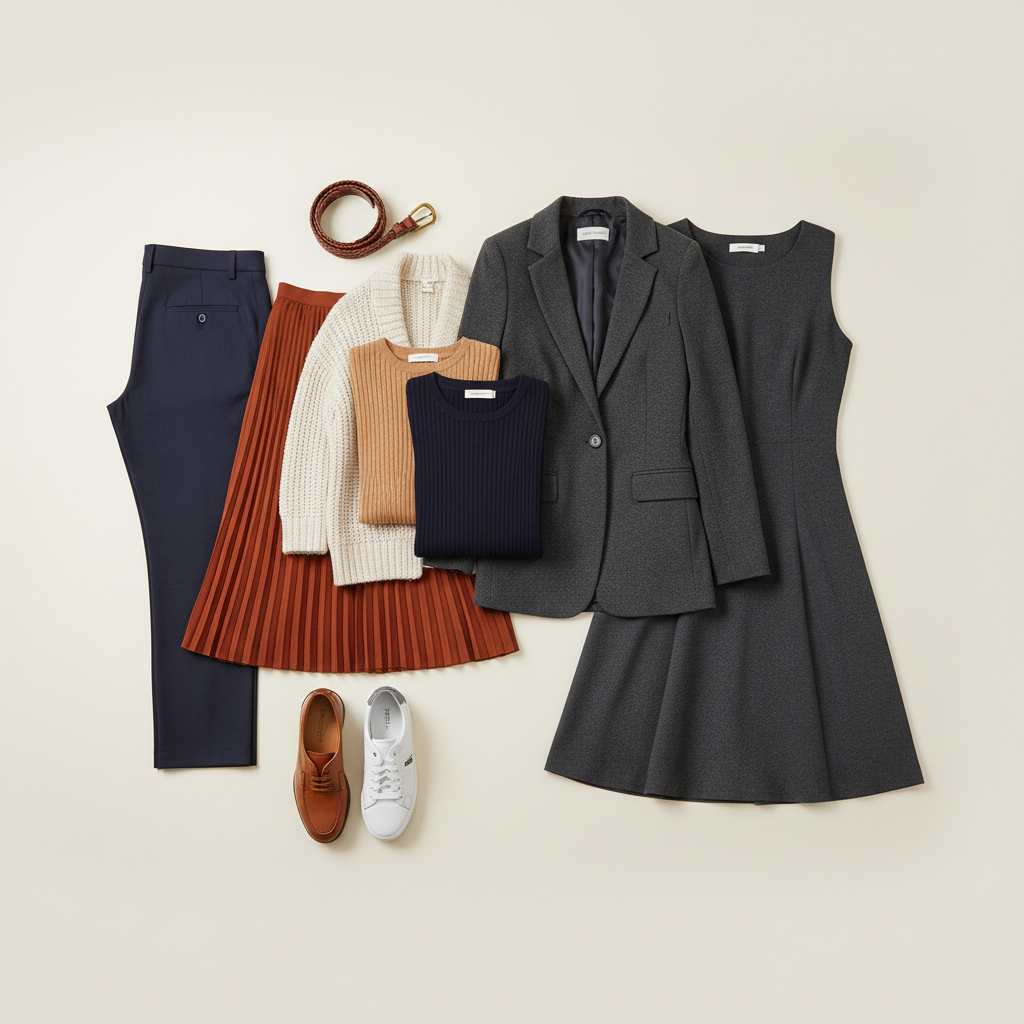
Formula 1: Blazer or knit jacket + tee/shell + ankle pants
- Why it works: instant structure, easy to remove if your room is hot.
- Make it teacher-proof: choose stretch ankle pants and a top that stays tucked or drapes cleanly.
- Shoes: loafers, low-profile sneakers (if allowed), or block-heel booties.
Formula 2: Cardigan + fitted top + straight-leg pants (or dark denim)
- Why it works: softer than a blazer, still reads intentional.
- Watch-outs: overly long cardigans can snag on desks and door handles.
- Upgrade tip: add a simple belt or structured tote to sharpen the look.
Formula 3: Midi dress + layer + “real” shoes
- Why it works: one-piece outfit when you’re tired.
- Make it classroom-safe: consider bike shorts underneath and a neckline that stays put when writing on the board.
- Layer options: cropped cardigan, denim jacket (if your campus allows), or a blazer for meetings.
Formula 4: Skirt + knit top + tights (seasonal, but reliable)
- Why it works: professional without feeling formal.
- Fabric tip: ponte and knit skirts hold shape and handle long days better than thin woven fabrics.
Formula 5: “Uniform” set for busy weeks
Pick one pant you love in 2 colors, one shoe you can walk in, and 5 tops that all match. This is the lowest-effort way to keep teacher outfit professional consistency when life gets loud.
A practical weekly outfit plan (with a simple table)
If planning outfits drains your energy, use a light structure. You can still swap pieces, but the template removes decision fatigue.
| Day | Base Outfit | Best For | Quick Upgrade |
|---|---|---|---|
| Mon | Blazer + knit top + ankle pants | Meetings, strong start | Simple necklace or structured bag |
| Tue | Cardigan + tee + straight-leg pants | Teaching-heavy days | Swap to loafers in a rich neutral |
| Wed | Midi dress + light layer | Comfort + polish | Add belt for shape |
| Thu | Pattern top + solid pants | Spirit days (subtle) | Matching earrings, neat hairstyle |
| Fri | Polished casual (as allowed) | Jeans day, clubs, pep rallies | Blazer over a school tee |
Keep one backup outfit at school if you work with paint, young kids, labs, or unpredictable weather. It’s not dramatic, it’s realistic.
The details that make outfits look more professional (without buying a lot)
Most “professional” wins come from the small stuff. When people say an outfit looks polished, they’re usually reacting to these cues.
- Fit at the shoulders: even a cheap blazer looks better when shoulders sit correctly.
- Clean lines: fewer fussy layers, fewer pieces fighting each other.
- Consistent color story: neutrals plus one accent color is easy and rarely wrong.
- Shoes that look intentional: clean sneakers, loafers, or simple flats beat “cute but worn-out.”
- Fabric matters: ponte, knit blends, and structured cotton often outperform thin polyester.
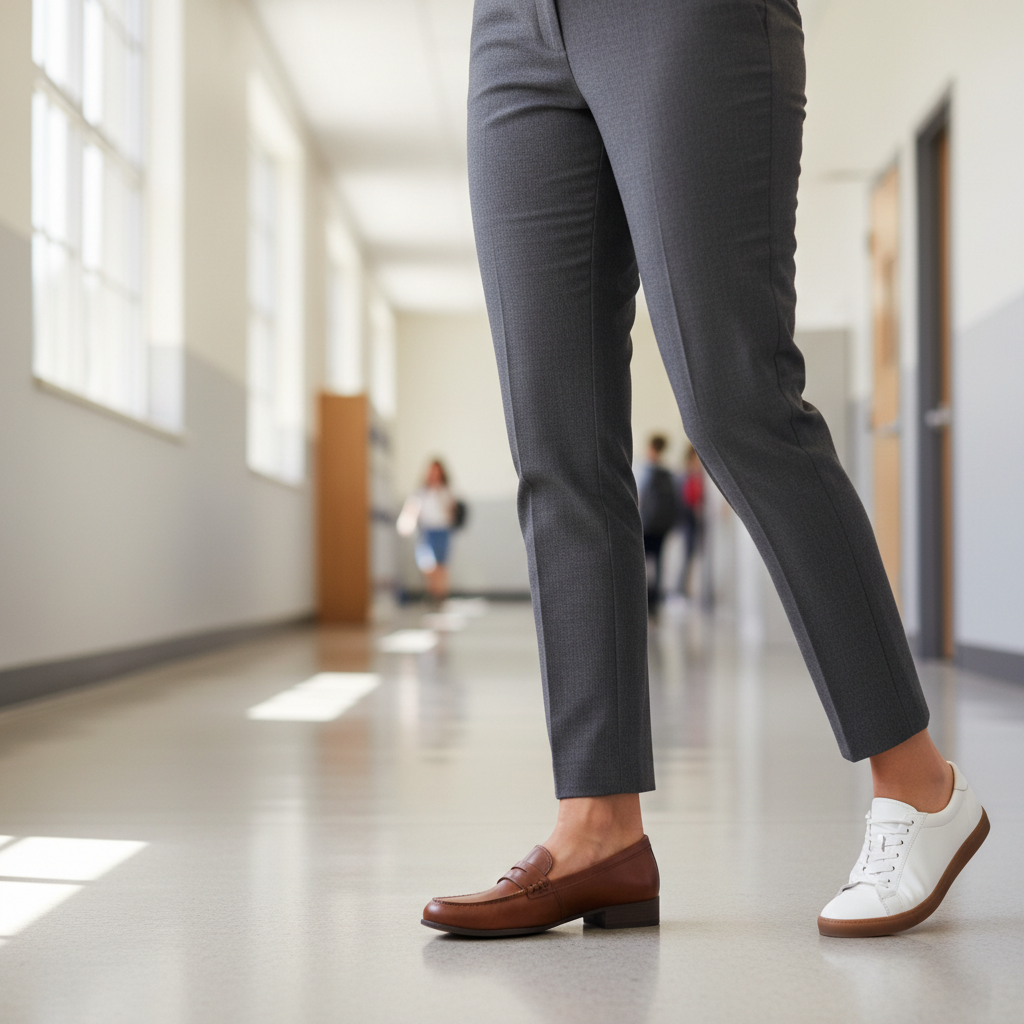
Key point: If you change only one thing, upgrade your shoe plan. The right pair supports your day and makes the rest of your outfit look more purposeful.
Doable shopping strategy (and what to stop buying)
Shopping for a teacher outfit professional wardrobe works better when you buy around your actual week, not a fantasy version of it. Start with 10–12 items that rotate well.
Smart “starter list” (build around this)
- 2 pairs of pants you can sit, squat, and move in
- 1 dark denim (only if your campus allows)
- 5 tops that layer easily (knit tees, shells, button-ups if you like them)
- 1 blazer or structured jacket
- 1 cardigan or sweater jacket
- 1 dress or skirt option for when you want an easy win
- 2 shoe options: one “meeting” pair, one “all-day” pair
What to stop buying (it usually backfires)
- High-maintenance fabrics if you know you won’t dry clean regularly
- Trendy silhouettes that don’t match your school lane
- “Almost comfortable” shoes, they rarely become comfortable later
- Thin, clingy tops that need constant adjusting
Common mistakes and how to avoid them
- Overcorrecting into corporate: suits can feel stiff in a classroom, and students read stiffness.
- Going too casual too fast: new-to-campus teachers often regret starting with ultra-casual outfits before learning the norms.
- Ignoring safety: open-toe shoes or long, dragging hems may be risky in some classrooms. If you have a specific concern, consider checking your district policy or asking admin.
- Relying on one hero piece: if the outfit only works when that blazer is clean, you’ll get stuck midweek.
According to OSHA, employers are responsible for providing a safe workplace and addressing recognized hazards. In practice, that means if your role involves lab work, shop tools, or frequent outdoor supervision, functional footwear and sensible clothing choices aren’t just style, they’re part of doing the job safely.
When it’s worth getting extra help
If you feel stuck in a cycle of buying items you don’t wear, help can be surprisingly practical.
- Ask your admin or mentor teacher if your campus dress expectations feel unclear.
- Try a tailor for one or two key pieces, hemming and waist adjustments can change everything.
- Consult a podiatrist if foot pain is constant or worsening, especially if you stand all day. Comfort matters, and chronic pain is not a “teacher rite of passage.”
Conclusion: a professional look that still feels like you
A strong teacher outfit professional wardrobe is less about having endless options and more about having reliable formulas that fit your school lane, your body, and your schedule. If you want a simple next step, choose one repeatable outfit formula and build two versions of it, then fix shoes and layering so your day feels easier.
If you do that, you’ll spend less time second-guessing in the morning and more time showing up the way you want to, calm, capable, and ready to teach.
FAQ
What is considered a professional teacher outfit in the U.S.?
Usually it’s business casual or polished casual: clean, modest, and intentional outfits like ankle pants with a cardigan, or a midi dress with a layer. The exact line depends on district culture and building norms.
Can teachers wear sneakers and still look professional?
In many schools, yes, if the sneaker is clean, minimal, and paired with structured pieces like ankle pants, a blazer, or a smart sweater jacket. Athletic running shoes read more casual than leather or low-profile styles.
How do I look professional as a new teacher without spending a lot?
Start with a tiny capsule: two pants, five tops, one layering piece, and one comfortable shoe that looks intentional. Repeating a “uniform” is normal in schools, most people won’t notice, but they will notice polish.
Are jeans acceptable for teacher professional outfits?
It depends. Some campuses allow dark, non-distressed denim daily, others reserve it for Fridays or special days. When in doubt, watch what respected veteran teachers wear and match that level.
What colors work best for teacher outfits?
Neutrals like navy, black, gray, camel, and olive mix easily, then you can add one accent color you like. If you want to look more formal quickly, choose deeper tones and fewer contrasting pieces.
How can I stay professional in a very hot or very cold classroom?
Use layers you can remove without ruining the outfit, like a knit jacket or cardigan, and pick breathable base layers. If temperature swings are extreme, keep an extra layer in your room so you’re not stuck.
What shoes are best for teachers who stand all day?
Supportive loafers, flats with structure, and low block heels often work, and some clean sneakers are acceptable in many schools. If pain is frequent, it’s worth discussing with a podiatrist or trying supportive insoles.
Key takeaways you can use tomorrow
- Pick your school “lane” (classic business casual, polished casual, or practical professional) and shop inside it.
- Use outfit formulas you can repeat, not one-off looks.
- Prioritize shoes and layers, they do more work than statement pieces.
A soft next step (if you want it)
If you’re trying to rebuild your wardrobe without the trial-and-error spiral, it can help to create a small capsule plan and a week template based on your actual schedule. If you’d rather have a more streamlined approach, consider using a checklist like the one above and shopping specifically for two repeatable formulas before adding anything else.