
Wrap dress flattering is usually less about “one magic dress” and more about a few smart details, neckline, waist placement, fabric weight, and how you style the wrap so it stays put.
If you’ve ever tried one on and thought, “Why is this pulling at the bust?” or “Why does the hem feel uneven?” you’re not alone, wrap dresses can look effortless, but the fit has rules.
This guide gives you outfit ideas that work across body types, plus a quick self-check, a practical styling table, and small adjustments that make a wrap dress feel secure and look polished.
Why wrap dresses tend to look flattering (and when they don’t)
A wrap dress often flatters because it creates a natural V-neckline and a defined waist, two visual cues that many people find balancing. The diagonal wrap line also breaks up the torso, which can feel more forgiving than straight seams.
But real life includes wind, walking, sitting, and different bra shapes, and that’s where things go sideways. Common issues come from the wrap opening, the waist tie sitting too high or too low, or fabric that’s too thin and clings in the wrong places.
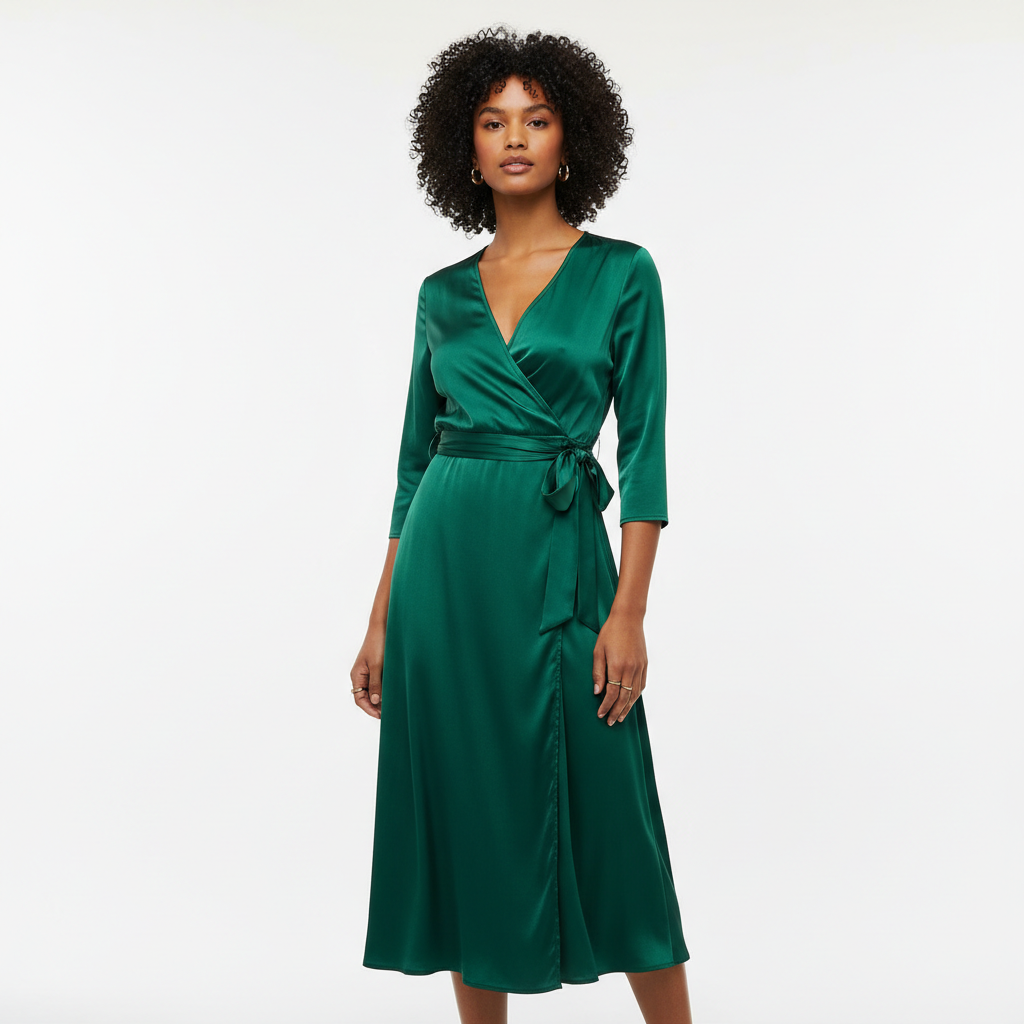
According to CFDA (Council of Fashion Designers of America), fit and construction details like drape and seam placement strongly influence how garments sit on different bodies, which is basically the wrap-dress story in one sentence.
Quick self-check: what “flattering” means for your wrap dress
Before buying or styling, decide what you want the dress to do. A wrap dress flattering outcome can mean “longer-looking legs,” “more waist definition,” “less chest gaping,” or “comfortable all day.” Your goal changes the best cut.
Use this checklist in the fitting room (or at home)
- Neckline security: do you bend forward without feeling exposed?
- Waist placement: does the tie hit your natural waist, or creep upward?
- Skirt movement: when you walk, does the wrap overlap stay closed?
- Fabric behavior: does it cling, wrinkle fast, or go sheer in sunlight?
- Sleeve balance: do sleeves add comfort and proportion, or feel bulky?
If you check “no” on neckline security or overlap staying closed, you’re not stuck, you just need a more secure wrap style or a small styling fix.
The fit details that matter most (so you can shop with intent)
Most people focus on print and color, but wrap dresses succeed or fail on construction. Here are the details that usually make the biggest difference.
Neckline + bust area
- True wrap vs faux wrap: faux wrap styles often reduce gaping because the wrap is stitched in place.
- Inner tie or hidden snap: look for an interior button, snap, or tie to anchor the wrap.
- V depth: a slightly higher V tends to feel more wearable for work and errands.
Waist + tie placement
- Higher waist can lengthen legs, but may feel tight when sitting.
- Natural waist reads classic and tends to suit most occasions.
- Slightly lower waist can feel easier on the midsection, especially in stiffer fabrics.
Skirt shape + hem length
- A-line midi is the crowd-pleaser: movement, coverage, and easy shoe pairing.
- Mini wrap can work, but overlap and wind become real concerns.
- Maxi wrap looks dramatic, but choose fabric with weight so it doesn’t twist.
Wrap dress outfit ideas for different settings
The easiest way to make a wrap dress flattering is to style around the silhouette you already have, then adjust one “support piece” (shoe, layer, belt, or bag) to match the setting.
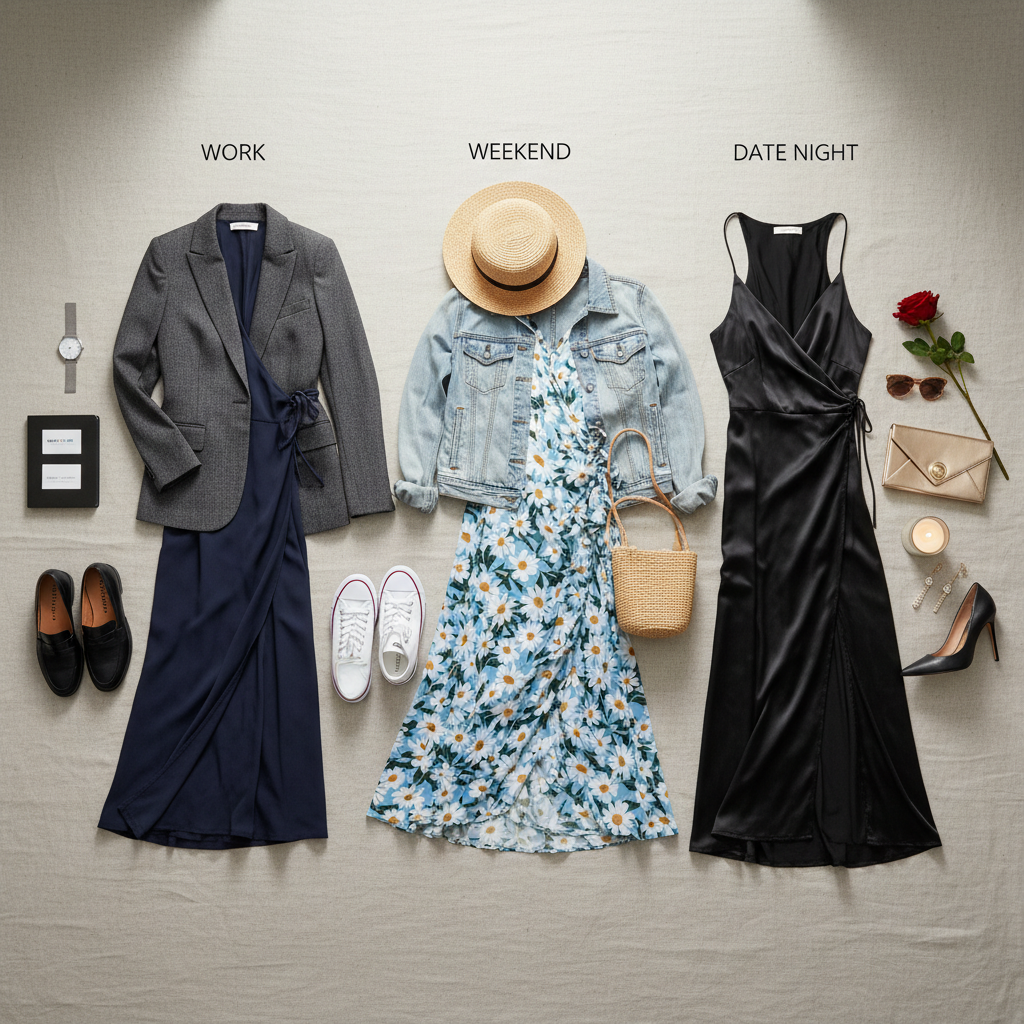
Work: polished, not fussy
- Choose a faux wrap or a true wrap with an interior tie.
- Add a structured layer: blazer, cropped jacket, or fine cardigan.
- Shoes: loafers, block heels, or sleek ankle boots.
Tip that saves outfits: if the neckline wants to open, a simple camisole in a matching tone looks intentional, not like a fix.
Weekend: comfortable and easy movement
- Go for jersey, cotton, or a soft knit that doesn’t require constant adjusting.
- Layer with a denim jacket or lightweight overshirt.
- Shoes: clean sneakers, sandals, or clogs.
Date night: emphasize shape without discomfort
- Try satin-like fabrics carefully, they photograph well but show tension lines if too small.
- Heels are optional, a pointed flat can still sharpen the look.
- Jewelry: V-neck loves a short pendant or layered delicate chain.
Practical fixes when your wrap dress doesn’t behave
When someone says a wrap dress “doesn’t work,” it’s often one of three problems: gaping at the bust, shifting at the waist, or the skirt opening as you walk. Most fixes are simple.
Neckline gaping
- Fashion tape for occasional wear, test on skin first if you’re sensitive.
- Hidden snap sewn in by a tailor, quick and usually inexpensive.
- Layering with a camisole or lace bralette you actually want seen.
Waist tie slips or rides up
- Double-knot, then tuck ends to reduce swinging and loosening.
- Add a thin belt over the tie for structure, especially with soft jersey.
- If the wrap twists, you may need a different size or a wrap with an inner tie.
Skirt opens while walking
- Try a slip short for comfort and peace of mind.
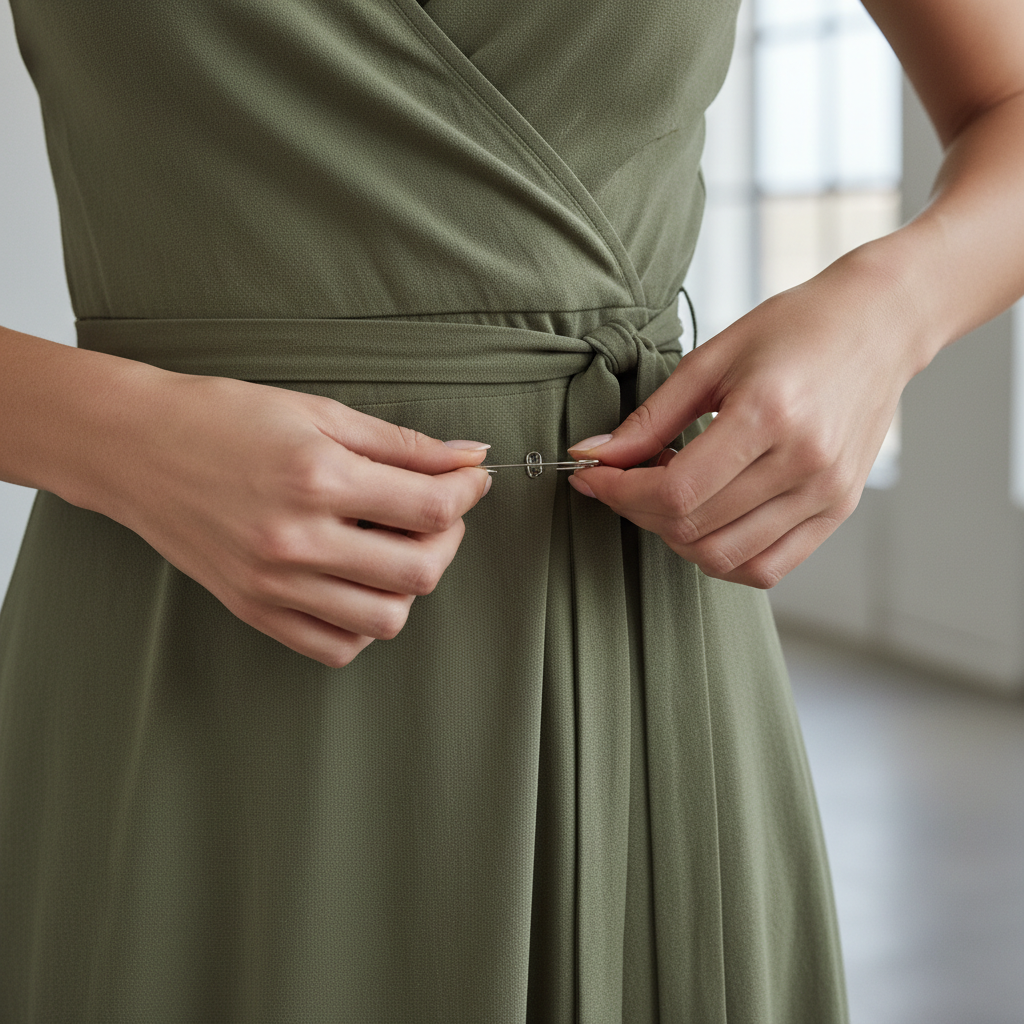
- Use a small safety pin at the overlap, placed inside so it doesn’t show.
- Choose heavier fabric or a longer hem if wind is a recurring issue.
Styling cheat sheet: choose the right wrap dress vibe
If you want a fast decision tool, this table covers common goals and what tends to help in practice.
| Goal | Wrap Dress Feature to Look For | Styling Move |
|---|---|---|
| More waist definition | True wrap with firm tie, medium-weight fabric | Add a slim belt or structured bag to sharpen lines |
| Less bust gaping | Faux wrap, higher V, inner snap | Use a tonal cami, skip bulky necklaces |
| Smoother midsection | Matte fabric, small print, wrap with drape | Choose shapewear only if comfortable, avoid clingy knits |
| Longer-looking legs | Higher waist, above-ankle midi, side slit kept modest | Wear nude-to-you shoes or pointed toes |
| All-day comfort | Stretch wrap, wider tie, soft sleeves | Go with sneakers or block heels, bring a light layer |
Common mistakes that make a wrap dress look less flattering
Some “wrap dresses aren’t for me” moments come from styling choices that fight the garment.
- Buying too small to “hold the wrap closed,” which usually creates pulling and rolling.
- Ignoring underlayers, the right bra and a simple cami can change the entire neckline.
- Over-accessorizing around the V-neck, the dress already creates a focal line.
- Ultra-thin jersey in light colors without testing in daylight, it can show more than expected.
If the fabric becomes sheer or uncomfortable, it’s worth choosing a different material rather than trying to “fix” it with constant adjusting.
When it’s worth getting professional help
If you love the dress but it never feels secure, a tailor can add an interior tie, a snap, or adjust the wrap point so the overlap sits correctly. That small construction change often matters more than switching shoes or adding another layer.
If you notice skin irritation from tape or adhesives, consider patch testing or asking a dermatologist for guidance, especially if you have sensitive skin.
Key takeaways to remember
- A wrap dress flattering look usually comes from neckline security plus the right waist placement.
- Faux wrap and inner snaps reduce gaping without changing the vibe.
- Styling works best when you pick one support piece: layer, belt, or shoe, not all at once.
- If the wrap won’t stay closed, don’t blame your body, adjust the construction or choose a more stable fabric.
Pick one outfit goal for your next wrap dress, work-ready, weekend-easy, or night-out, then use the self-check list before you commit. It saves returns and it saves frustration.
FAQ
What makes a wrap dress flattering on different body types?
Usually it’s the V-neck plus a defined waist, but the “flattering” part depends on where the waist hits and how secure the wrap stays when you move.
How do I keep a wrap dress from gaping at the chest?
Look for a faux wrap or an interior snap, and if you already own the dress, fashion tape or a simple cami can help, especially for work settings.
Is a faux wrap dress better than a true wrap?
Faux wrap styles often feel easier and more secure. True wrap dresses give more adjustability, but they can shift more during the day.
What shoes look best with a midi wrap dress?
Block heels, ankle boots, and clean sneakers all work, the “best” choice depends on the occasion and whether you want a dressier or casual finish.
Can petite women wear wrap dresses without looking overwhelmed?
Yes, many petites do well with shorter midi lengths, smaller prints, and less fabric volume at the skirt, and a slightly higher waist can help.
How do I style a wrap dress in colder weather?
Add tights and ankle boots, then layer with a fitted turtleneck under the dress or a structured coat on top, just watch bulk around the waist tie.
What undergarments work best under a wrap dress?
A supportive bra that matches your neckline is the foundation, and a slip short can improve comfort and coverage if the skirt overlap shifts.
If you’re trying to build a small wardrobe around pieces that actually get worn, start by picking one wrap dress that feels secure and comfortable, then create two repeatable outfits from it, one casual, one polished, that’s usually the fastest path to a reliable “grab-and-go” look.